

The human cost of AI-made copies
For years, we've loved sharing the development of VirtualSociety with you. We love explaining our choices, showing our progress, sometimes getting into a few technical details, and talking with those of you who follow the game.
Over the past few months, alongside the huge number of small copycat games popping up on Steam and social media, we've seen more and more similarities to our work in other projects whose developers publicly describe using AI coding agents in fully automated workflows. To be honest, in recent weeks we've reached a point where we're losing sleep over it, feeling on edge, and finding it really hard to stay positive about our work. We keep wondering what we can still feel comfortable showing. And this situation is starting to damage something we care deeply about: the joy of creating and sharing.
We need to talk about how this feels, as a small team that has devoted years, its savings, and so much of its energy to this project. We spent evenings and weekends on it for years before leaving everything behind and putting everything on the line for this adventure.
Jimmy and I worked for two years without paying ourselves a salary, while still paying our team throughout that time. We invested our savings and took out two bank loans totalling €100,000, which we personally guaranteed, so we could pay our team. We took on these heavy commitments because this is the project of a lifetime for us, because we believe in this game and in the people we're building it with.
A growing list of similarities
Very recently, a new project appeared out of nowhere, and its announcements included an astonishing number of things that were identical or very similar to our own.
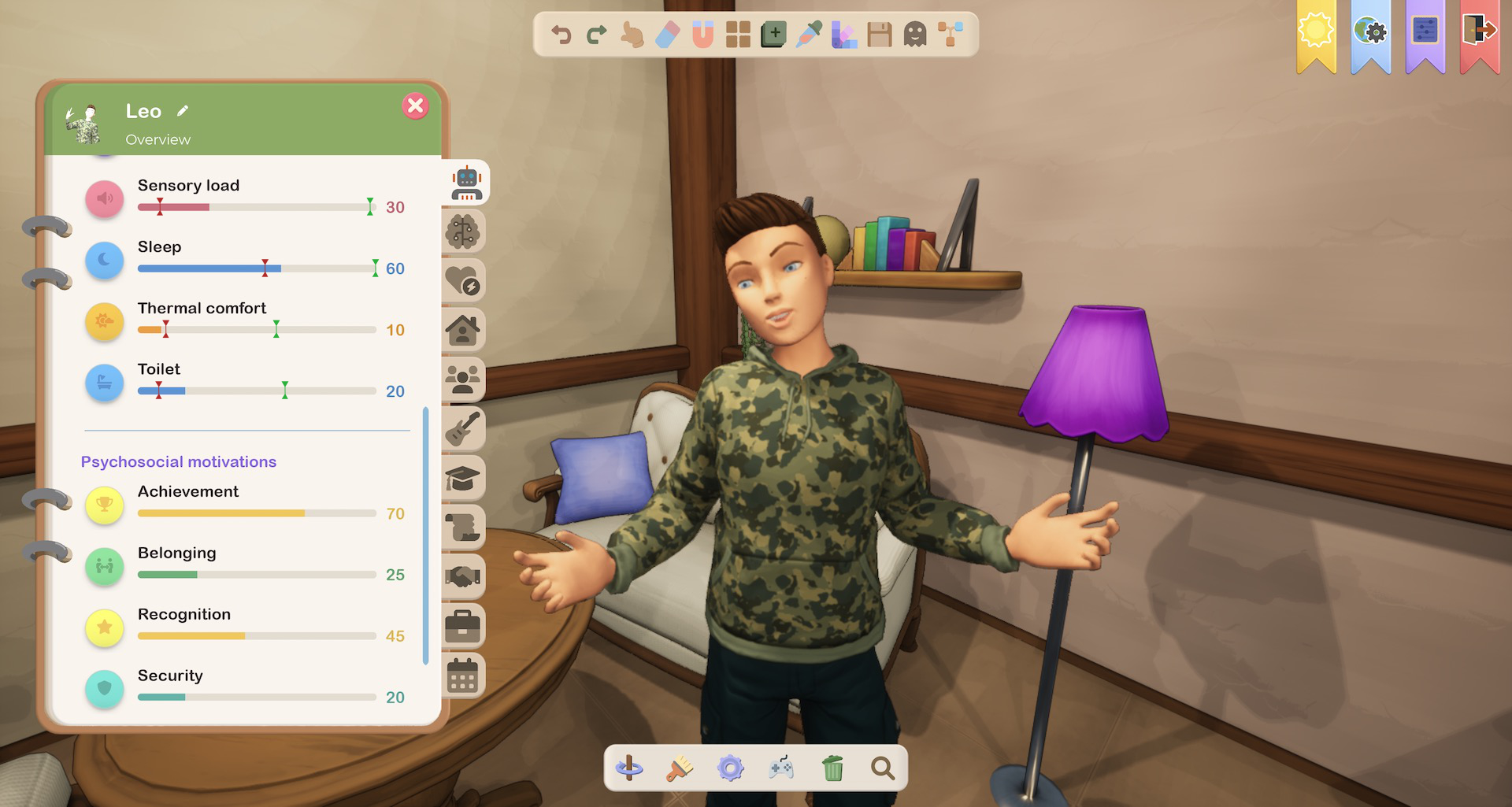
Character names, just one day apart. On October 9, we published an example featuring two characters, Léo and Tom. The next day, screenshots from another project showed characters called Leo and Tomas (we've been using Léo and Tom for years: we wrote Tom back in 2019, and Léo with the CHRU last year).
A combination of visual choices. We spent a year developing our paper-style interface: panels, photo cards, stationery details, and pastel tabs. We see a very similar combination of these choices in the other project's screenshots. Its website uses the same paper-grain effect that Solène, our graphic designer who created the old website design, used until August this year. Even the font has been copied!
A life sim centred on complex personalities, memories that aren't shared between all characters, social dynamics, and the spread of rumours: everything we've been talking about in our posts for months or years seems to be turning up in different places.
Handling characters who are already busy. On October 9, we talked about social requests directed at a busy character. On October 10, the other project also described this issue, with player requests being queued and autonomous requests being dropped. Once again, ideas repeated the very next day.
Relationships shaped by their history. On October 9, we explained how trust and significant disappointments can change a relationship over time. On October 26, the other project described reconciliation that doesn't erase what happened before, using almost exactly the same words as us.
Knowing before reacting. In our October 9 post, we explained that a character needs to have witnessed an event, or heard about it, before they can react to it. On November 3, the other project presented this principle through infidelity, witnesses, and rumours. Again, three topics we'd talked about in the preceding weeks.
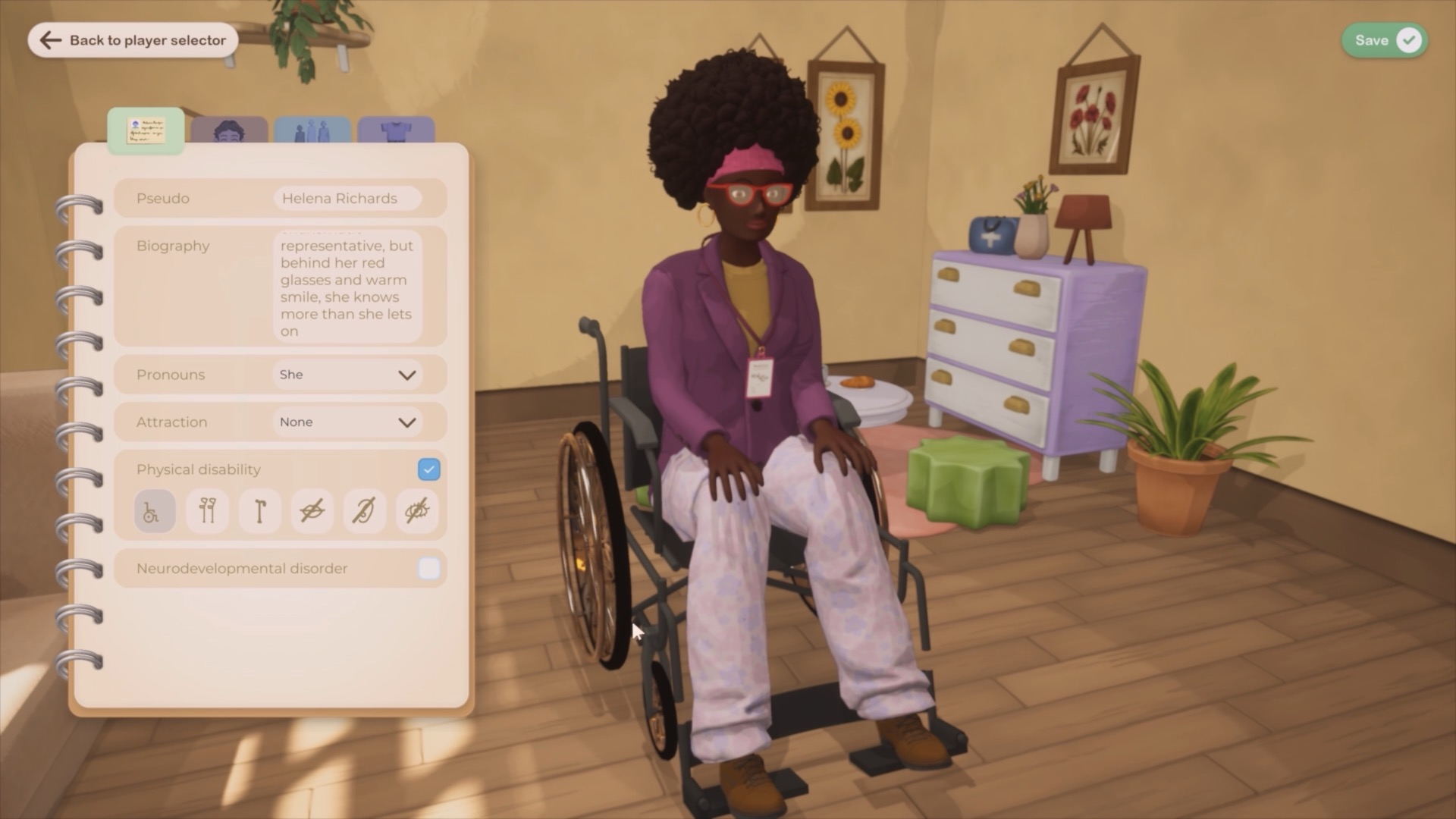
Gestures that make characters recognisable. On September 23, we introduced signature gestures, using the example of Helena lowering her glasses, and explained our intention to give characters distinctive gestures. On November 3, the other project talked about recognisable quirks achieved through layered animations. The similarity here is in the way characters are given a visible personality.
Presenting different ways to play. We've always presented VirtualSociety as both a life simulation game and a sandbox, with different ways to play and tell stories. We see that same positioning in the other project's presentation, with optional stories and objectives. Its roadmap also uses the exact heading “Three Ways to Play”, which we used in our presentation.
Positioning the game as a sandbox life sim. We've also spent quite a lot of time explaining how a game can be both a life sim and a sandbox, and how the different ways of managing characters, mods, and so on can work perfectly well for players used to more traditional life sims.
We know that ideas can come naturally, and that some similarities can happen. But this many, especially in such a short time, leaves us with serious doubts. And we could have made a much longer list; we kept only the points that wouldn't directly identify anyone.
Over time, we've started to dread publishing our own work. We wonder what we'll find elsewhere after the next article, the next video, the next explanation.
Years of work behind a few lines
Our devblog can sum up months of work in a few sentences, or a decision that took years of thought. The questions, experiments, mistakes, and conversations that led to that result remain largely invisible.
When it comes to disability and neurodiversity, this situation affects us particularly deeply. Behind these topics are memories of people, conversations, and things we've learned to understand better. As early as May 2023, we were meeting with psychologists and autistic people from a local collective in Nancy to talk about their daily lives and what VirtualSociety could offer them. We publicly presented this collaborative approach in 2024, then organised a discussion with a local association to raise awareness of autism in 2025. For more than a year, we've been working with an association bringing together around ten health and social care facilities, towards an “inclusive business” label and to ensure the game is accessible to people with multiple disabilities, through adapted controllers, reduced cognitive overload, and more.
Alongside this, we've spent years thinking about getting around, accessible places, sensory needs, different experiences of fatigue, and how all of this can play a part in relationships between characters. We recently described a situation involving Helena. She goes out with her friends, but the bar they planned to visit isn't wheelchair accessible. She suggests another place, and the group goes there together. When they plan their next outing, this experience should influence their decisions.
To bring this scene to life, we need to think about what the characters know about the place, how they react when they discover the problem, and what they'll remember afterwards. That shared experience needs to influence their future choices. For us, this scene connects the game's systems with conversations we've had with people about their lives. Making it believable, and giving it a place in how the world works, takes time.
We spoke publicly again about wheelchair accessibility and the needs of neurodivergent characters on September 23 and October 9. On November 3, the other project mentioned physical and mental disabilities, with possible links to character traits. Once again, this similarity adds to the others, while we know the years of conversations and thought behind our own approach.
I'd love more games to represent disabled and neurodivergent people. I'd love more developers to take the time to listen to them. Even so, seeing these topics appear among so many other familiar choices hurts, because we know what lies behind our own approach, and our goal was never to have a marketing angle. With others, it feels like opportunism.
When sharing becomes difficult
What scares us about AI-made copies is the thought that everything we've worked on and poured our time and energy into could become a shortcut for someone else, who gets the credit in just a few weeks. The conversations, doubts, and years of research that led to our choices can then disappear behind a new presentation.
A feature description can spread far faster than a small team can build that feature, test it, and refine the systems that make it possible. Behind a screenshot, a short video, or an announcement, it's often hard to see how much work that represents.
We're afraid that the project people discover first, or see most often, will become the one they associate with ideas we've been working on for years. Meanwhile, we have to keep doing the underlying work and find the energy to make our own approach known.
This worry is also starting to change the way we share with our community.
Publishing a devblog used to be something we loved. We wanted to explain our choices, read your reactions, and discuss the things we were still trying to figure out. Now, we're wondering what we should keep to ourselves until the game is further along.
We feel anxious about publishing things we used to be excited to show. Some of the joy of creating and sharing disappears with that.
Why we're talking about this
For years, we've put all our heart, all our money, and all our energy into building VirtualSociety. Your messages, shares, and support mean so much to us. To everyone supporting us on Patreon, everyone who's joined the community and shared their ideas on Discord, and everyone who tells their friends or favourite streamers about VirtualSociety: you have no idea how much you've meant to us, or how much strength you've given us to keep going. VirtualSociety online would have stayed a small 2D game if JodieDreams hadn't supported the project so much back then. The videos from AJ Plays Sims and My Gameplay Diary gave us a huge boost at the start of the year, and of course all the other videos since then have helped enormously in getting the project known, bringing in feedback, and helping us keep going.
Sorry there won't be a Patreon post this week. We'll make up for it next week with two posts! We've talked a lot with the team over the past few days, and we felt we needed to get this off our chest before returning our focus to our usual content.
We're not used to writing this kind of article, and we're sorry to be talking about something negative for once. We really wanted to speak honestly and from the heart about this difficult period. And we're not exaggerating: we've had some really bad nights over the past few weeks, and it's really hard to keep our spirits up these days. Behind the videos and devblogs, we're a small team of people who can become exhausted. Right now, this situation is weighing very heavily on our morale and on the joy we take in building the game and sharing what we create.
We have no intention of abandoning the game. Quite the opposite! We'll keep doing our best to make it everything we've always wanted it to be, and hopefully live up to the expectations we've created through everything we've shared with you so far.
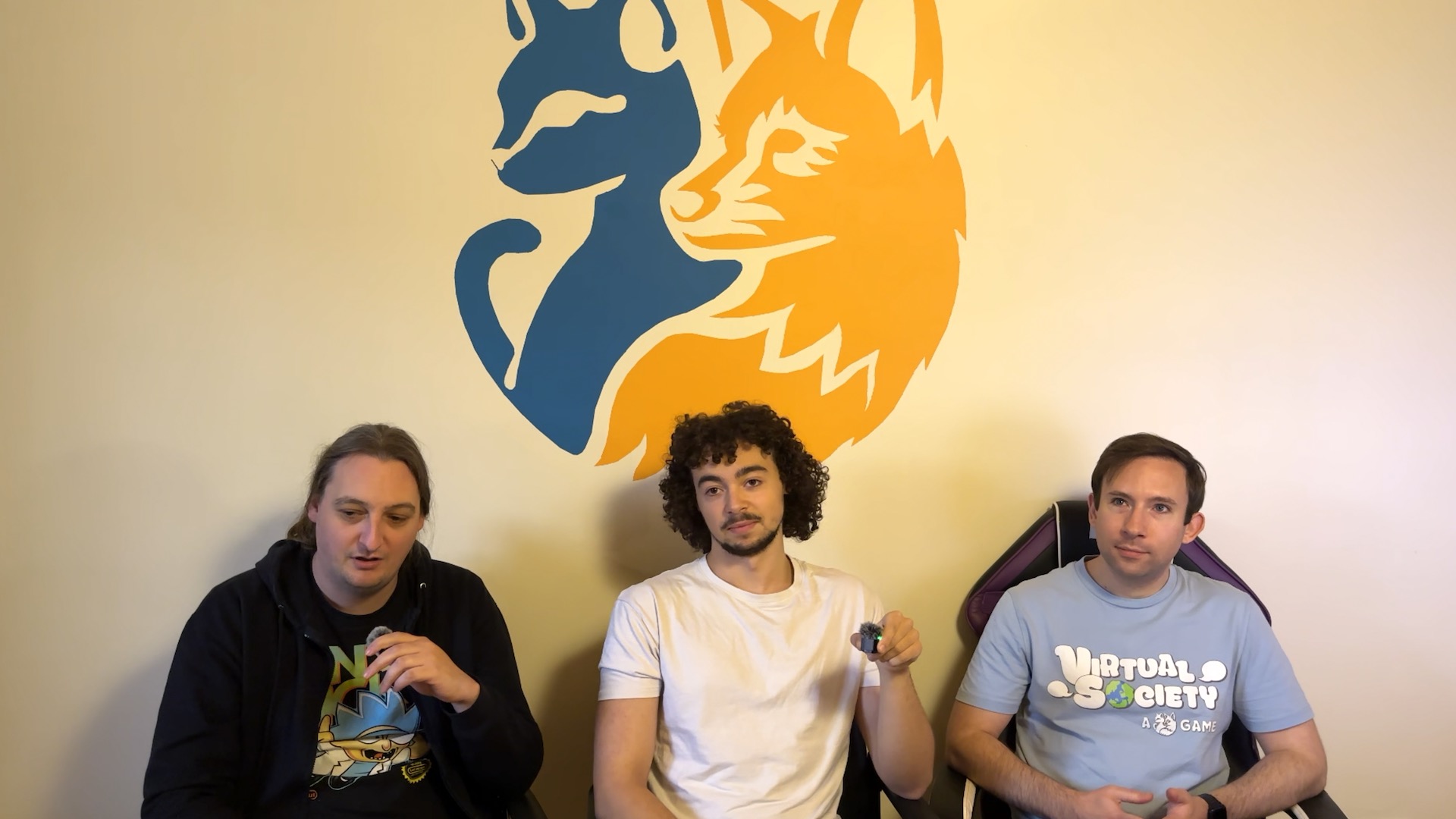
Nico, Jimmy and Lenny
No comment yet